


If you’re facing faucet issues in Bordentown, NJ, you’re not alone. A dripping faucet or low water pressure can be frustrating, but identifying the problem is the first step to a quick fix. You’ll need some basic tools and a bit of know-how. Ready to tackle those common issues? Let’s break down what you need to do and get your faucet back in working order.
Identifying Common Faucet Issues
Have you ever wondered why your faucet drips or makes strange noises? Identifying common faucet issues can save you time and money.
First, check for leaks; a dripping faucet usually means a worn-out washer or O-ring. You might also notice odd noises like rattling or banging—due to water pressure issues or air trapped in the pipes.
If your faucet’s flow is weak, it might be clogged with mineral buildup or debris, so cleaning the aerator can help. Additionally, look for corrosion around the faucet base, indicating more serious plumbing problems.
If you spot any of these signs, addressing them early can prevent bigger issues down the road. Don’t ignore these warning signals; a little investigation now can lead to a smoother, more efficient faucet in the long run. For assistance with severe plumbing issues, consider reaching out for contact information to get expert help.
Watch for these common problems to maintain your home’s plumbing system effectively.
Tools You’ll Need for Faucet Repair
Once you’ve identified the common issues with your faucet, it’s time to gather the right tools for the repair. You’ll need a few essentials to make the job easier.
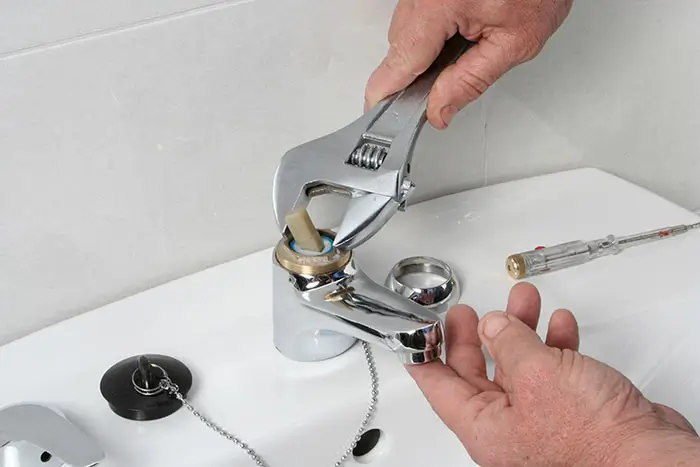
First, grab an adjustable wrench or a basin wrench; these will help you loosen and tighten fittings. A screwdriver set—both flathead and Phillips—is essential for removing faucet handles and securing components.
Don’t forget a pair of pliers for grasping small parts and a utility knife for cutting any old tape or seals.
Additionally, a small bucket or towel will catch any dripping water during the repair. If you’re dealing with stubborn parts, penetrating oil can help loosen them up.
Finally, a flashlight is handy to illuminate dark spaces under the sink. With these tools in hand, you’ll be well-prepared to tackle your faucet repair efficiently. If you encounter any issues, you can always seek assistance by contacting the provided help information.
Step-by-Step Guide to Fixing Leaky Faucets
Fixing a leaky faucet is a straightforward process that you can tackle in just a few simple steps.
First, turn off the water supply to prevent any spills. Next, plug the drain to avoid losing any small parts.
Unscrew the faucet handle and remove the packing nut with a wrench. Inspect the washer or O-ring for wear and tear, as this is often the culprit behind leaks. If it’s damaged, replace it with a new one.
Reassemble the faucet by reversing your steps, tightening everything securely, but don’t overdo it. Finally, turn the water supply back on and check for leaks.
If everything looks good, you’ve successfully fixed the issue! If the leak persists, consider calling in a professional. Remember, you can always contact user support or navigation assistance if you need further help.
Resolving Low Water Pressure in Faucets
Wondering why your faucet’s water pressure has dropped? You’re not alone, and there are a few common culprits.
First, check for leaks in the plumbing leading to your faucet; even a small leak can decrease pressure.
Next, inspect the aerator. Mineral buildup can clog it, reducing flow. Unscrew the aerator, clean it thoroughly, and reattach it.
If that doesn’t solve the issue, examine the valve. Sometimes, it’s partially closed or malfunctioning, leading to low pressure.
Additionally, consider whether your home’s water supply is experiencing issues. If neighbors report similar problems, it might be a municipal issue.
Finally, if you’ve tried all of this and the pressure remains low, it’s time to call a professional. Dustin’s Plumbing Heating and A/C Repair can help you pinpoint and fix the problem, ensuring you get back to enjoying a strong water flow in no time. Remember, using the Contact Us Form is a great way to reach out for assistance.
Tips for Maintaining Your Faucet for Longevity
Regular maintenance is key to ensuring your faucet lasts for years. You can prevent common issues and guarantee smooth operation by taking a few simple steps.
Here are some effective tips to keep your faucet in top shape:
- Clean aerators regularly to prevent mineral buildup.
- Check for leaks around the base and handles; fix them promptly.
- Tighten loose parts to avoid rattling and potential damage.
- Lubricate moving parts with plumber’s grease to guarantee smooth operation.
- Inspect hoses and connections for wear and replace them if needed.
Conclusion
So, there you have it! With a little elbow grease, you can turn your faucet from a drippy nuisance into a water-saving hero. Just remember, if your kitchen sink starts sounding like a tap-dancing octopus, it’s probably time to take action. Regular maintenance can keep your faucet running smoothly, saving you from future plumbing dramas that could rival a soap opera. Now go forth, and may your faucets flow freely and silently, like a well-rehearsed symphony!